Sunday, March 8, 2015

REPOST: Free Online Architecture and Design Courses

Want to learn more about architecture but do not have the resources to enroll in a university program? These online platforms, which are free MOOCs and accredited by well-known universities across the globe, are ideal for you, then:


Image source: archdaily.net

Thanks to the increasing popularity of massive open online courses — or MOOCs as they’re commonly referred to — learning has never been easier (or more convenient). Sites like Coursera and edX offer free classes online from accredited and well-known universities across the globe, including Harvard, MIT and the University of Hong Kong. While some classes are more structured and include a set lesson plan, homework assignments, quizzes and the option to receive a certificate at the end, others can be set at your own pace and approached more independently.

Following our wildly popular article on Four Ways to Learn About Architecture for Free, we’ve compiled a list of upcoming online classes related to architecture, engineering, urbanism and design. So whether you’re looking to embark on a new topic or dive deeper into an already familiar subject, take a look at these free online courses after the break.

Coursera: An online platform that partners with top universities and organizations across the globe, Coursera offers architecture and design courses in several different languages, including Chinese, Spanish and French. An optional Verified Certificate is available following completion of the class. Below are descriptions of some of the upcoming architecture and design classes.

Re-Enchanting the City-Designing the Human Habitat (April 2015- June 7th 2015): This eight-week course is taught by professors from the University of New South (UNSW) Australia. The class looks at the “interdisciplinary nature of city making,” seeking to answer the question: How do we make hyper-dense cities of the future green, livable and poetic? Specifically, the class looks at the development of Central Park in Sydney as a case study. The course materials include a series of interviews by lead academics and designers, interactive activities, and case studies.

L’art des structures 1 : Câbles et arcs (The art of structures 1: Cable and arcs) September 12, 2015- November 21, 2015: Taught in French (with English subtitles) by professors from the Ecole Polytechnique Fédérale de Lausanne in Switzerland, this course looks at the design principles behind cables and arches. It will be followed by a course on lattice structures, beams and frames later in the year.

For Chinese speakers, the National University of Taiwan has a CAD /BIM Technology and Application Specialization program on Coursera, which includes several courses:


  • CAD 3D computer graphics (June 1, 2015 – July 24, 2015)
  • BIM project information management application (June 2015 – November 2015)
  • CAD 2D computer graphics (June 2015 – July 29, 2015)


edX: Started as a non-profit initiative between Harvard and MIT, edX offers classes from top universities and institutions. Classes can be audited or taken to earn a Certificate of Achievement, and some courses are offered in Spanish and Chinese. Below are descriptions of two of the classes beginning this month.

The Search for Vernacular Architecture of Asia, Part 1 (starts March, 14): Offered through the University of Hong Kong, the five-week class seeks to explore vernacular architecture – “the subject and study of everyday buildings, landscapes and sites which are not designed by professional architects.” The class will look at native building materials as well as the relationship between vernacular architecture and culture and traditions across Asia. Part 2 will be offered during the summer.

Introduction to Metrics for Smart Cities (starts March, 23): Organized through IEE, a technological innovation professional organization, the class seeks to both understand what components make up a “Smart City” and how to use “metrics to measure its performance.” Although open to anyone, the class is recommend for students in their last year of urbanism, architecture or information technologies.

Other upcoming classes on edX include:


  • Liderando el Desarrollo Sosentible de las Ciudades (Leading Sustainable Development in Cities) starts March 17, 2015
  • Future Cities (Starts April, 1)
  • Urban Water – Innovations for Environmental Sustainability ( starts May, 5)


Iversity: A European-based site, Iversity features classes from universities across Europe in both English and German. The site offers the option to audit the class for free or pay a fee to receive a certificate. Although only one architecture-related course is set to begin in the next couple of months, keep an eye out for future classes in the second half of the year as past classes have included Contemporary Architecture and Designing Resilient Schools.

Architecture 101 – Part III, From Space to Architecture (begins April 27, 2015): Although part of an ongoing three part introductory class, participation in the first two parts is not required. The class is taught by teachers from the Academia di Belle Arti Abadir and course materials include videos, reading and design assignments.

Canvas: Developed and supported by learning technology company Instructure, the site offers classes from professors around the world. Below is an upcoming design class being offered in March.

Biomimicry: A Sustainable Design Methodology (March 23, 2015 – April 20, 2015): This online class looks at how to effectively apply biological information to design, providing an introduction to the tools and principles of biomimicry. Taught by a professor from the Minneapolis College of Art and Design, the class will focus on a different biomimicry design concept each week, taking participants outside to explore the concept firsthand and to develop their own biomimetic design.

For classes from Open Online Education, Delft University of Technology OpenCourseWare and MIT OpenCourseWare, make sure you check out our previous article Four Ways to Learn About Architecture for Free.

I am William B. Lauder, a freelance architect based in New York City. Follow me on Twitter for more links to articles about architecture.

Thursday, January 8, 2015

REPOST: 10 Great Architectural Lessons from Frank Lloyd Wright

“Every great architect is – necessarily – a great poet. He must be a great original interpreter of his time, his day, his age,” said Frank Lloyd Wright, one of the foremost figures in modern American architecture. Prolific yet controversial, Wright was an architect whose works are not so much architectural projects as they are statements to his philosophy as a designer. His works include the Fallingwater house, hailed by Time magazine as “the best all-time work of American architecture.” This article from Freshome.com provides a brief yet comprehensive glimpse on Wright, his works, insights, and ideals.

Born on June 8, 1867 Frank Lloyd Wright is not only one of the world’s greatest architects, but he was also the most prolific, controversial as well as inspiring. He was a writer, an art collector a philosopher as well as a visionary and these all inspired his approach to his craft. He is widely known for four styles of building. He conceived of the Prairie Style which was born out of his belief that we needed fewer, larger rooms which flowed more easily, his antithesis to the rigid Victorian era architecture. From there the Textile Style was born, which led way to the Organic Style and then the Usonian Style. His belief that buildings should be made from the land and benefit the land inspired most of his work. These beliefs, avant garde for his time, are still practiced and revered today.

Image Source: freshome.com
Frank Lloyd Wright Portrait Photo

1. “The architect must be a prophet… a prophet in the true sense of the term… if he can’t see at least ten years ahead don’t call him an architect.”

Frank Lloyd Wright was clearly a man ahead of his time. The design of many of his homes once seemed light-years ahead of their time, and people often had trouble understanding his vision, yet almost all of our modern construction puts to use the ideals he thought to be so important.

2. “Every great architect is – necessarily – a great poet. He must be a great original interpreter of his time, his day, his age.”

Frank Lloyd Wright first became known for his Prairie Style of architecture which incorporated low pitched roofs, overhanging eaves, a central chimney, and open floor plans which, he believed was the antidote to the confined, closed-in architecture of the Victorian era. From there he went on to establish the Textile style which took on an even more linear approach, combined with influences from Mayan architecture, this would lead the way to what, perhaps, Wright is best known for Organic Architecture which drew from natural resources combined with the influence of Japanese architecture. The Organic style then led way to the Usonian style. It is clear to see how each style has grown and evolved from its predecessor.

3. “There should be as many (styles) of houses as there are kinds (styles) of people and as many differentiations as there are different individuals. A man who has individuality has a right to its expression and his own environment.”

The works of Frank Lloyd Wright have a uniquely individual style. Of his varied styles, no two homes or buildings look alike.

4. “A building should appear to grow easily from its site and be shaped to harmonize with its surroundings if Nature is manifest there.”

It should be noticed that the buildings the architect built in the Middle Western part of the United States are vastly different in nature, style and material than the buildings he designed in Arizona, Los Angeles and Pennsylvania. Each style is as unique as the make-up of the land is different.

Image Source: freshome.com
Fallingwater by Frank Lloyd Wright

5. “No house should ever be on a hill or on anything. It should be of the hill. Belonging to it. Hill and house should live together each the happier for the other.”
Nowhere is this more apparent than in his Organic Architecture. Perhaps this is most especially true of the home Fallingwater, where house and land truly have merged to become one.

6. “The mother art is architecture. Without an architecture of our own we have no soul of our own civilization.”

Frank Lloyd Wright built according to his vision of what the future would be. He saw the need for homes to be more fluid, more open, more livable, and less restrained. He foresaw the need to build from the earth and for the earth. His architecture both documented a time in history and yet managed to push the envelope with his modern philosophical approach to the future of building.

7. The following was told to Mike Wallace, American newscaster and television reporter, in 1957: “I’d like to have a free architecture. I’d like to have an architecture that belonged to where you see it standing, and was a grace to the landscape instead of a disgrace. And the letters we receive from our clients tell us how those buildings we built for them have changed the character of their whole life, and their whole existence. And it’s different now than it was before. Well, I’d like to do that for the country.”

And he most certainly did. Mike Wallace didn’t understand the term organic and Wright had to explain that this term meant from nature, that organic architecture was indeed a natural architecture. Today, fifty-five years later, we finally understand what the architect spoke of so passionately half a century ago.

8. “The good building is not one that hurts the landscape, but one which makes the landscape more beautiful than it was before the building was built.”

Wright stood for clean lines and simplicity. He believed that a well built building complemented it’s environment and surrounding. He disliked the intricate detail and fussiness of the architectural styles that preceded him.

9.“Architecture is life, or at least it is life itself taking form and therefore it is the truest record of life as it was lived in the world yesterday, as it is lived today or ever will be lived.”

Architecture is perhaps the truest documentation of how a civilization has lived and evolved. Art tells the story of a moment in time. Architecture tells the story of a past, a present and a future. We take from it, evolve, grow and move forward. Look at today’s modern houses. Look at their straight lines, their wide open spaces, the lower roofs and how they seamlessly are integrated with the varied geographies and landscapes. No doubt we see a little bit of Frank Lloyd Wright in each of these edifices.

Image Source: freshome.com
Guggenheim Museum New York

10. “The mother art is architecture. Without an architecture of our own we have no soul of our own civilization.”

Frank Lloyd Wright’s most important contribution to architecture as well as to the arts and society is arguably The Guggenheim Museum in New York City. In this building a history of people, of time, of art and of architecture are all united. In this modern edifice that will be celebrating its 50th Anniversary this year, art, science, nature, architecture and anthropology co-exist peacefully. In this building, Wright pioneered trends that architects today continue to embrace. A true visionary, Wright was an architect of his time, well ahead of his time.

Frank Lloyd Wright was a visionary and controversial. He was famous for his beliefs and convictions. His ideals, words and foresight continue to be used as inspiration for all artists and artisans today. Looking at today’s modern buildings, can’t you see the Frank Lloyd Wright influence? Which ones do you think bear the most striking similarities?

I’m William B. Lauder, and as an architect I’ve studied the styles of famous American designers, among them Frank Lloyd Wright’s. Do you consider Wright as one of the greats? Follow me on Twitter and let me know your thoughts.

Wednesday, September 3, 2014

REPOST: When Dylan met the Beatles – history in a handshake?

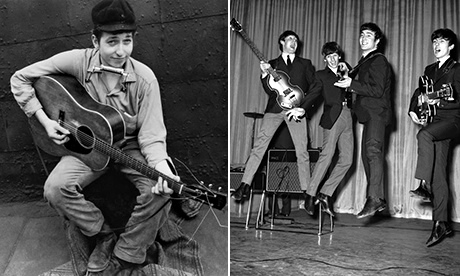
On August 28, 1964, renowned Minnesotan folk poet and musician Bob Dylan and British pop foursome the Beatles were said to have convened in a New York hotel, after which both acts changed their musical tack significantly. This article soberly speculates on what really happened that night while discussing other larger-than-life collisions in music history.

Kicking down the doors of perception … Bob Dylan and the Beatles.
Photograph: Getty
Image Source: theguardian.com

Just as a stopped clock tells the right time twice a day, the 50th anniversary of a major Beatle-related happening comes around every other week in 2014. Friday marks one of the bigger half-century landmarks, and the birth of a way of looking at rock music that just won't go away. On Friday 28 August 1964, in a room in the Delmonico hotel at Park Avenue and 59th in New York City – at a rendezvous brokered with a keen eye to a story by journalist, mutual friend and assiduous self-publicist Al Aronowitz – the Beatles encountered Bob Dylan for the first time.

Here the folk-singing scarecrow-prophet introduced the excitable Scousers to marijuana for (allegedly) the first time. Ringo Starr, the first to be offered a smoke and ignorant of dope etiquette, chugged through that first joint like a stevedore attacking his first Woodbine of the morning and collapsed in a giggling mess. Brian Epstein became so stoned he could only squeak,"I'm so high I'm up on the ceiling." Paul McCartney believed he'd attained true mental clarity for the first time in his life and instructed Beatles roadie and major-domo Mal Evans to write down everything he said henceforth. Dylan, meanwhile, lost his cool and began answering the hotel phone by shouting, "This is Beatlemania here!" Otherwise they drank wine and acted the goat, like bands do.

The post-game analysis was that, the doors of their perception not so much cleansed as kicked to matchwood and burnt, the Beatles then left behind childish things and set out on the road to enlightenment, serious artistry and self-expression at all costs. Exposed to the Beatles, Dylan would go on to create folk-rock and import the social conscience of traditional American music into the rock arena, thereby providing the counterculture with its national anthems.

Never ones to undersell their achievements, baby boomers subsequently promoted this fairly shambolic Beatles-Dylan hangout as a decisive summit, a defining event of rock culture. "Until the advent of rap, pop music remained largely derivative of that night at the Delmonico," Aronowitz would later proclaim. (Goodnight, soul, funk and disco; back in your box, James Brown and Kraftwerk.) "That meeting didn't just change pop music – it changed the times."

The truth, inevitably, is more prosaic. "The meeting was a game-changer," says Mark Ellen, co-founder of Mojo and Q magazines, "but it wasn't the instant dramatic meeting of superpowers that people imagine." The two parties had already regarded one another with envy long before they met. The Beatles were becoming tired of screaming teenage fans and life as a group, just as Dylan was becoming enamoured of exactly those things. "At the Delmonico," says Ellen, "they were passing one another at a time when each of them would quite liked to have been the other one."

Afterwards, the Beatles began to mine their own interior lives for personal, self-examining songs like Michelle and Yesterday. Dylan made 1965's Bringing It All Back Home album, half of which featured a rattling full electric-rock group, to the horror of the turtleneck crowd. "These changes were probably going to happen anyway," Ellen argues. "And the Beatles and Dylan were eventually going to meet because they had to meet, just as the Beatles had to meet Elvis eventually. They were the biggest things on the planet at the time."

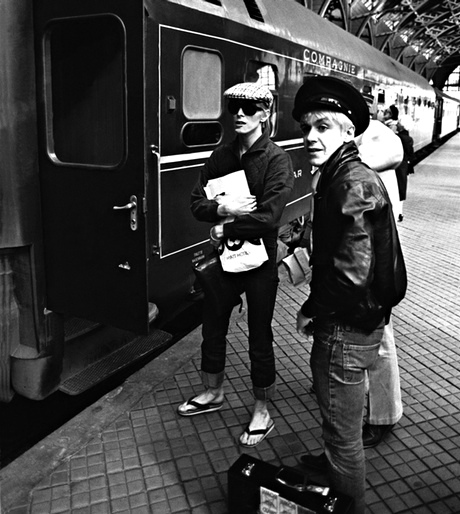
 David Bowie and Iggy Pop.
Photograph: Jan Persson/Redferns
Image Source: theguardian.com

Yet the idea of an ultimate turning point, a fork in the woods, a Zarathustra moment where everything changes, persists. It plays to the pop fan's weakness for a version of the "great man" theory of history – the notion that everything depends on this one decision or that single conjunction – and connects to the lure of the counterfactual. (What if Kurt Cobain had lived?) If the Beatles and Dylan stories are modern myths, then the Delmonico hotel meeting becomes that most modern and meta of all pop events, a crossover episode. It's Sherlock meets the X-Men, it's England meets America, it's Dylan's adopted dustbowl past meeting the Beatles' democratised hyper-pop future, one side nourishing the other. You can see where this sort of thinking leads a person.

In which case, maybe it's sad that pretty much every fateful encounter in music turns out not to be quite so singular after all. Take, for instance, the case of Keith Richards and Mick Jagger. They first run into one another on the platform at Dartford station in October 1961. Mick is carrying a clutch of rare blues records, Keith a hollow-bodied Hofner cutaway guitar. They recognise kindred spirits, fall to talking about music and within a year have formed the Rolling Stones. A prime Sliding Doors moment, you'd think.

Except that they already knew each other from primary school. And the London blues scene that gave birth to the Stones was such a small one that, even separately, Richards and Jagger would surely have gravitated to Alexis Korner's Ealing jazz club and therefore Charlie Watts, Ian Stewart and finally Brian Jones. Maybe events would have corrected themselves, as they do in science fiction.

David Bowie meeting Iggy Pop at Max's Kansas City club in 1971, without which no Raw Power, no Ziggy Stardust and therefore, arguably, neither glam-rock nor punk? It was hardly a chance meeting. Bowie, besotted with the Stooges, had made a point of seeking out Jim Osterberg and Lou Reed, too.

You could say that Roger Daltrey spotting Who bass player John Entwistle in the street really was a lucky coincidence. ("I hear you play bass," the singer reputedly said, an astute observation given that Entwistle was actually carrying one at the time.) But even the most dedicated Who fanatic would find it hard to argue that this providential encounter determined the band's future. Whoever played bass, the Who would still be the Who.

Morrissey meeting Johnny Marr? The guitarist tramped over to Stretford specifically to knock on the future Heaven Knows I'm Miserable Now hitmaker's door and demand that they write songs together (plus they'd already met once at a Patti Smith concert). Clash manager Bernard Rhodes spotting John Lydon on the King's Road in an "I Hate Pink Floyd" T-shirt? The incestuous London pre-punk scene of 1975 would surely have brought Lydon and the Sex Pistols together eventually. Simon and Garfunkel? Met at elementary school. Pete Doherty and Carl Barât? Who cares?

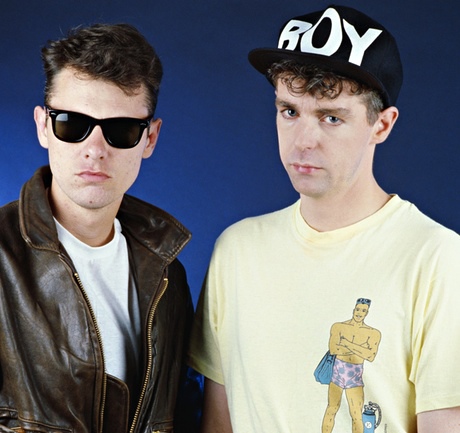
Chris Lowe and Neil Tennant.
Photograph: Fabio Nosotti/Corbis 
Image Source: theguadian.com

Pretty much the only serendipitous meeting that stands up is that between Pet Shop Boys Neil Tennant and Chris Lowe, who happened upon each other in a hi-fi shop on the King's Road in August 1981, got talking about music and were writing songs together within a week. Yet both were habitués of London clubland and would surely have got together sooner or later anyway.

Just as we no longer think that the assassination of Franz Ferdinand "caused" the first world war, perhaps we only imagined that unrepeatable meetings between supernatural talents shaped our music culture. Meanwhile, the very notion of a meat-space encounter between opposing talents is disappearing as collaborations take place virtually. The 50th anniversary of Kanye West dropboxing a file to Daft Punk is unlikely to be celebrated. And that's probably a good thing.


Willam B. Lauder is a New York-based architect who draws inspiration from his favorite music artists, such as the Beatles and Bob Dylan. For more on music, architecture, photography, and science, follow him on Twitter.

Tuesday, August 5, 2014

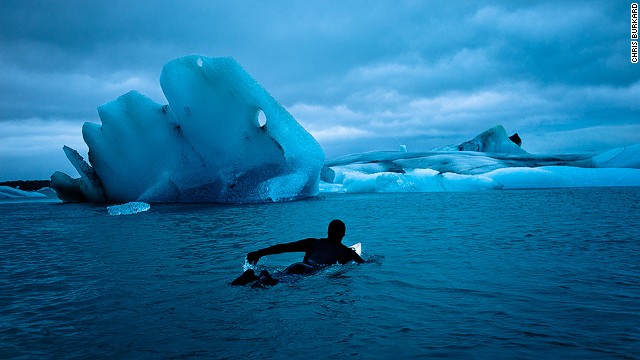
REPOST: Amazing video: Extreme surfers in the Arctic

Read this CNN exclusive interview with extreme surf photographer Chris Burkard about his love for surfing in the Arctic.

Image Source: cnn.com

(CNN) -- "I love to suffer," says extreme surf photographer Chris Burkard.

That much is clearly evident from his incredible portfolio (see photo gallery below left), built up from shooting surfers as they ride waves in some of the most extreme places on the planet.

The California-based photographer hikes glaciers, dons wetsuits and routinely gets slammed by his subjects (unintentionally) as he tries to get as close as possible to the action.

His latest project is documented in a stunning video collaboration with SmugMug Films, part of a behind-the-scenes series highlighting photographers at work.

Risking his life for the perfect wave

Shot over a two-week period in Norway, the film, called "Arctic Swell - Surfing the ends of the earth," shows Burkard and his surfing companions battling blizzards as they catch freezing Arctic swells.

"You feel like you're really paying the price but the greatest rewards come," says Burkard.

We asked the photographer why he chases storms and swells and where he loves to shoot most.

CNN: How long have you been chasing extreme wave shots?

Burkard: I started chasing waves with my surfing and bodyboarding friends as a teenager because I found a certain thrill in being a part of the ocean's energy.

I feel that places with extreme waves make for the best stories, which is why I'll continue to chase not just extreme waves but also extreme landscapes in the remote corners of the world.

CNN: Do you surf yourself?

Burkard: I surfed a bit growing up but it was always more about the ocean for me than about the sport of surfing.

The ocean was really my inspiration in the beginning of my photography career and continues to motivate me every day.

I try to get in the water daily because it seems to have the ability to constantly rejuvenate and inspire me in all aspects of life.

Living near the beach has also provided me the ability to be constantly near great waves and surfers.

Central California is an amazing coastline and no matter where I travel, coming home to this stretch of coast gets me excited.

Image Source:cnn.com
                                                 
CNN: Tell us about shooting this video.

Burkard: We traveled to Norway in the spring, when the weather is constantly in flux. Storms shift in out of nowhere and sunny skies can quickly become blizzards.

We spent the entire two weeks of the trip in the Lofoten Islands staying in a cabin not far from the beach. When we weren't surfing we were warming ourselves up in hot springs and near bonfires.

CNN: What kind of media/audiences have the biggest appetite for your kind of work?

Burkard: My portfolio is saturated with tons of surf imagery but I aim to make it appeal to bigger audiences.

It's not just for the surfers out there but also the travelers and nature enthusiasts and really anyone who dreams of visiting these places.

CNN: Do you have a particularly memorable anecdote from the trip?

Burkard: The Arctic and Norway always lend themselves to a ridiculous amount of freezing.

When we first arrived on the beach the waves were hardly visible because of the storm -- as we opened our doors the chill of the wind, hail and snow spread up our bodies and it felt like our core temperature dropped 20 degrees in a matter of seconds.

I'd told the guys mid-flight that they had to be ready for any type of weather when we landed, but honestly did not expect this strong of a storm to be sweeping through.

The session only lasted about 40 minutes as the guys could barely drop into waves with the snow and hail blowing against their faces. They said it was impossible to even open their eyes on some of the waves and were essentially surfing blind.

Image Source:cnn.com


CNN: What are three of your favorite places to photograph?

Burkard: Central California. It's been my home for 28 years. I've lived in nearly every city and traveled to as much of the beautiful surroundings that this section of the coastline offers. There's so much variety in this region from camping above the clouds in Big Sur to exploring other worldly dunes near Pismo Beach.

I've been to Iceland 13 times and will continue to go back for its unparalleled rawness from the beaches to the mountains. Iceland delivers with hot springs, ice lakes and some of my favorite beaches like Vik and Hofn.

The Pacific Northwest offers a diverse landscape with waterfalls, forests, mountains, lakes and a rugged coastline.

Oregon summers are close to perfect with temperatures in the mid-80s and sunny skies. Oregon claims they have their own seven wonders with Mt Hood, Columbia River Gorge, the Wallowas, Painted Hills, Crater Lake, the Coast and Smith Rock.

I've been to five of them and they are totally worth it.

I recommend a road trip.

CNN: What's your next big project?

Burkard: I'm balancing my work between editorial and commercial projects and looking to line a few trips up for the fall.

I'm organizing a few road trips with my sponsors as well as potentially a trip back to the Arctic.

I'm also working on a children's book with The Dream Press.

CNN: Ever had any mishaps?

Burkard: Much of the actual accidents with my surf photography have happened in the water.

One of my most memorable experiences was when I went to Kamchatka, Russia. My passport had the wrong date on it and we argued about it for three hours and then the Russia customs security threw me in a jail cell.

I was in Vladivostok, a port city on the Sea of Japan. It's like the Wild West out there.

I spent 24 hours in a dirty holding cell -- it was basically a really gnarly hotel room with a guard at door. Then I got deported to Korea.

When I went back in 2012, it was sort of a redemption but I was scared and a little nervous it would happen again.

CNN: How do you get those in-the-water surfing shots?

Burkard: It's a challenge to nail that perfect capture of a breaking wave or an action shot. One of the biggest challenges is probably just swimming in the water and often swimming in some precarious situations while trying to get as close as you can to the surfers.

There have been many times I have taken water housings to the face or collided with the athlete. Though it's dangerous it's just part of the job.

The ability to capture those shots happens through good positioning and being a nimble swimmer.

Water shots are tough to get because you're literally dealing in inches.

CNN: How often do you travel?

Burkard: I travel about six to eight months out of the year and it's the foundation for a lot of my work. I've spent the better part the last 10 years chasing down cold surf in the Arctic and other remote parts of the globe.

I operate under the impression that travel should leave marks on you.

My style of traveling for surfing in particular is a different approach than most people are used to.

I'm drawn to places that are a bit more rugged and I love treating surf trips similar to some might treat travel to the mountains, preparing for every situation and making the extra effort to explore a foreign land.

CNN: What kind of photographer do you call yourself?

Burkard: I originally thought of myself as a landscape photographer or a surf photographer but I hate to categorize myself in just one category.

I find my work definitely incorporates a lot of those elements of adventure, travel and extreme sports.

William B. Lauder finds rest from his work as an architect by surfing the waves of Montauk. Read more about his love for surfing by following him on Twitter.

Friday, July 11, 2014

REPOST: Brisbane's history of modernist architecture on display

Natalie Bochenski of the Brisbane Times reports on a photography exhibit that chronicles the history of Modernist architecture down under through the exciting history of mid-century Brisbane.

Centenary Pool at Spring Hill, designed by architect James Birrell. Image source: brisbanetimes.com.au

The image of Brisbane as a sleepy country town through the 1950s, 60s and 70s is sometimes hard to dispel.

But a new exhibition at the State Library of Queensland aims to reveal the bubbling well of creativity that flourished in the middle of last century.

Hot Modernism: Building Modern Queensland examines architecture and design in the state between 1945 and 1975.

For SLQ co-curator Gavin Bannerman, it was a rich period in the state’s history, with an emphasis on clean lines, minimalist design, new construction materials and methods, colour, and a preoccupation with how people would live in the future.

Sunbakers by the pool in 1958 at Lennons Broadbeach Hotel, designed by architect Karl Langer. Image source: brisbanetimes.com.au

“The architectural community was a hotbed of ideas which continue to resonate with people now,” he said.

“The time was right coming out of the Second World War - there was more money around to realise these ideas, more people were attending university, they had been overseas and were able to push through changes they’d seen implemented elsewhere.”

The exhibition’s key display is a full size replica of Jacobi House, which was built in Indooroopilly in 1957 and is still occupied by offshoots of the same family.
“We wanted a bit of wow factor, a drawcard for people who might not know what modernism is,” Mr Bannerman said.
“You can show photographs or architectural plans, but nothing really beats experiencing it in its full scale.”

Visitors will also be able to sit in a 1960s living room, examine original drawings and historical photographs, and even play with 3D-printed models of Brisbane CBD buildings of the era.

“A lot of the designs feel contemporary because these people were thinking about how people would want to live in the future,” Bannerman said.

“It was kind of utopian. It was looking at how to structure things in a way that met the needs of modern living."
Mr Bannerman said the exhibition showed the influence the European and West Coast American strains of modernism.

“In the 50s there was a strong international modernist feel to a lot of the work in Queensland, which is clean lines, sparser, almost brutal in its minimalism,” he said.

Image source: brisbanetimes.com.au

“Later in the period you have an introduction to climatic concerns about design, so people started doing things that would better suit the Queensland environment such as cross-ventilation, shading and natural cooling.”

Much of Brisbane’s modernist work was done with residential houses and hotels, many of which has been lost to demolition and redevelopment.

One example of the futuristic style is the Centenary Pool at Spring Hill, which was designed by James Birrell for the state’s 100th anniversary in 1959 and is reminiscent of a home from The Jetsons.

“It speaks to a lot of people because it’s whimsical and people love the lines of it,” Mr Bannerman said.

Whereas the work of Robin Gibson, who designed the Social Sciences library and Mayne Hall at the University of Queensland, as well as the Queensland Cultural Centre, was heavier and bolder.

“They are part of Queensland’s built heritage, so they deserve to be considered for preservation as much as a 19th century building,” Mr Bannerman said.

Other examples of modernist structures include the Torbreck apartments at Highgate Hill, the Eisenmenger House at Carina and the Riverside Expressway.

William B. Lauder here. I'm an architect and a fan of photography and minimalism. Follow me on Twitter for more on my two loves.

Tuesday, April 29, 2014

REPOST: The Reinvention of Minimalism

Fusing minimalist interiors with quintessential French style, architect Joseph Dirand has made a name for himself in the world of architecture. See his work featured on this article from The New York Times Style Magazine.  

A uniform palette gives the master bedroom its tranquillity; a suede-covered
Oscar Niemeyer chair sits in front of an Irving Penn photograph.
Image Source: nytimes.com
In his elegantly spare Paris apartment, architect-of-the-moment Joseph Dirand introduces sensuous materials and classical elements to sublime effect.

“Je suis français, français, français,” Joseph Dirand says. “Parisien, parisien, parisien.” The son of Jacques Dirand, arguably the most famous interiors photographer of his day, and now himself one of fashion’s most heavily sought-after architects, Dirand has built a career on incorporating a quintessentially French style of design into otherwise minimalist interiors. In his hands, minimalism becomes the canvas for a portrait of a few classical elements, such as a parquet floor or a gilded bronze doorknob. 

Despite the demands of his booming business, Dirand, 40, recently found time to renovate an apartment in Paris’s Seventh Arrondissement, where he now lives with his girlfriend and their two daughters, each from previous marriages. He wanted to find a home that would reflect the rhythm of his modern life — something that had a generously proportioned living and dining room for entertaining, and a series of bedrooms to provide ample privacy for a family of four. “We live like parents for one week, then like teenagers the next,” Dirand says with a smile, running his fingers through his thick brown hair. (Whippet-thin, with the bearded face of a 19th-century French poet, he is effortlessly stylish and good-looking in a way that makes Americans feel inadequate.) He settled on a design that is elegant and a little bit louche. “I don’t care about style anymore, in a way I hate style, I hate design,” he says. “It’s about life, and generosity.”

If he does indeed hate style, it is not apparent from his home. Dirand’s apartment could easily be mistaken for one that is miraculously well-preserved, or painstakingly restored. The parquet de Versailles, the elaborate moldings, the bronze doorknobs are all, as the French would say, “corrects”; but they are not old. “I wished to find an apartment with all the details, but I had to create them instead,” he says. Dirand used the best craftsmen in France to ensure that the details reflect the former glory of the apartment. “I didn’t want anything Haussmann,” he says of the 19th-century plaster detailing often found in buildings of the period in Paris. Instead he sought to replicate the simplicity of Italian interiors of the 17th century from which he borrowed molding details and plain walls adorned with marmorino, a type of pigmented stucco. The slightly irregular walls subtly shift in color throughout the space, creamier in the bedroom and grayer in the entry and kitchen. The only surface that is painted is the millwork. He chose an off-white that “looks like it has darkened over time, with age and dirt — a white that is no longer white.”

The mirrored closet doors reflect the bed and an Azucena sconce.Image Source: nytimes.com

The traditional details of Dirand’s apartment are balanced with modern elements, particularly in the kitchen and the master bathroom, where he uses large slabs of heavily veined marble, a signature of his work. “I like to look for materials that express a lot of disorder,” he explains. In the kitchen, books, glasses, bottles and cooking utensils accumulate on the open shelf against his minimal impulse. While he doesn’t feel it necessary to hide all signs of real life, Dirand has developed a sleight of hand for those things he finds aesthetically unacceptable. A vent on the counter, for example, is painted faux marble to match the Paonazzetto slab. “I hated that this stainless-steel thing ruined the beauty of this stone,” he says with a grimace. Similarly the flat-screen television in the living room disappears into a cabinet at the touch of a button. Speakers, however, remain in plain sight. “I know all the tricks to hiding things, but sometimes it is better to show it in a nice way,” he says, pointing to two large Wilson Audios that look like robots. “Yes, you can hide them in the wall, but not if you care about how they sound,” he adds, raising the volume on the techno music to demonstrate.

The layout also provides floor-to-ceiling windows that allow light to flood into every single room of the apartment, a photographer’s dream. “I think in pictures, because of my father,” Dirand says. Every night after dinner, Jacques would look over film that had just come from the lab, selecting his favorite images and sharing them with his family. “Every day was a new place,” he says. Today, Dirand creates highly detailed renderings for his projects complete with furniture and installed art, tweaking the design until the picture is perfect.

In his earlier work, Dirand tended toward the minimal with a palette that rarely veered from black and white. The purposefully limited vocabulary emphasized the drama of a few well-chosen objects. In one of his memorable early residential projects, an exquisite Cy Twombly painting, an Art Deco marble fireplace and a vintage Serge Mouille lamp stand out against stark white walls and an ebonized floor. But subsequent projects have challenged him to expand his vocabulary. As his style has evolved over the past decade, he has honed his skills at incorporating the elements that evoke a history of a place or a brand. Perhaps the best example of this is the Balmain flagship store, considered by many to be one of the most beautiful stores in Paris. When Dirand went to visit the space where Pierre Balmain once lived and worked, he was shocked to find a dropped ceiling, fluorescent lights and Sheetrock walls. “Who gave permission to destroy this beauty?” he remarked at the time. He restored the space, drawing from the French vernacular: gilded bronze hardware, black-and-white limestone floors, boiserie and a marble fireplace that hints at the site’s previous use as Balmain’s residence. The only Modernist intervention is a series of floor-to-ceiling reflective panels that divide the space. Since then, he has gone on to design stores for Givenchy in Paris, Alexander Wang in Beijing and Rick Owens in London, has done the interiors of a luxury hotel in Mexico City and is currently working on Miami’s Surf Club. “I realize that brands come to me not for my own style, but for the way I tell a story,” he says.

His home accomplishes that, too, telling the very personal tale of someone who is deeply cultivated, effortlessly cool and, above all, enjoying life. “It’s not a showroom, or something to show clients,” Dirand says with a shrug. “It’s just my home.”
Hey, I’m William B. Lauder. Follow me on Twitter  for more articles on interesting architectural works.

Monday, April 7, 2014

REPOST: Small Buildings With a Big Impact: 'Small Architecture Now!'

Philip Jodidio's new book "Small Architecture Now!" features 64 architectural structures creatively designed in every corner. Read about this story in this article from The Wall Street Journal.
Philip Jodidio's new book includes 64 structures that show how
building small can make a big architectural impact.

Image Source: www.wsj.com
Good ideas often come in small packages. That was the inspiration for writer Philip Jodidio's new book "Small Architecture Now!" (Taschen, $59.99). It includes 64 structures, a third of them residential, that show how diminutive design can make a big architectural statement. As reduced budgets have led to more interest in smaller buildings, architects have found other benefits too—such as greater creativity. With bigger buildings, some clients "shy away from doing things that are unusual and inventive," says Mr. Jodidio. And as architect Tom Kundig told the author about his single-room Gulf Islands Cabin on a small island near Canada's Vancouver Island: "It's so small you have to go outside. That's the point!"
Hey, I’m William B. Lauder. NY-based architect, arts and science freak. Follow me on Twitter for more links to articles about architecture.